
AI - Achieving Benefits

It’s not only about the technology…

In the last few posts I posited that we are at an inflection point in the capabilities of AI and its potential to deliver major benefits IF used correctly and for the right use cases. The last post teased that we need different forms of AI to achieve deterministic outcomes - where we can rely on the results without the delay and cost of human oversight.

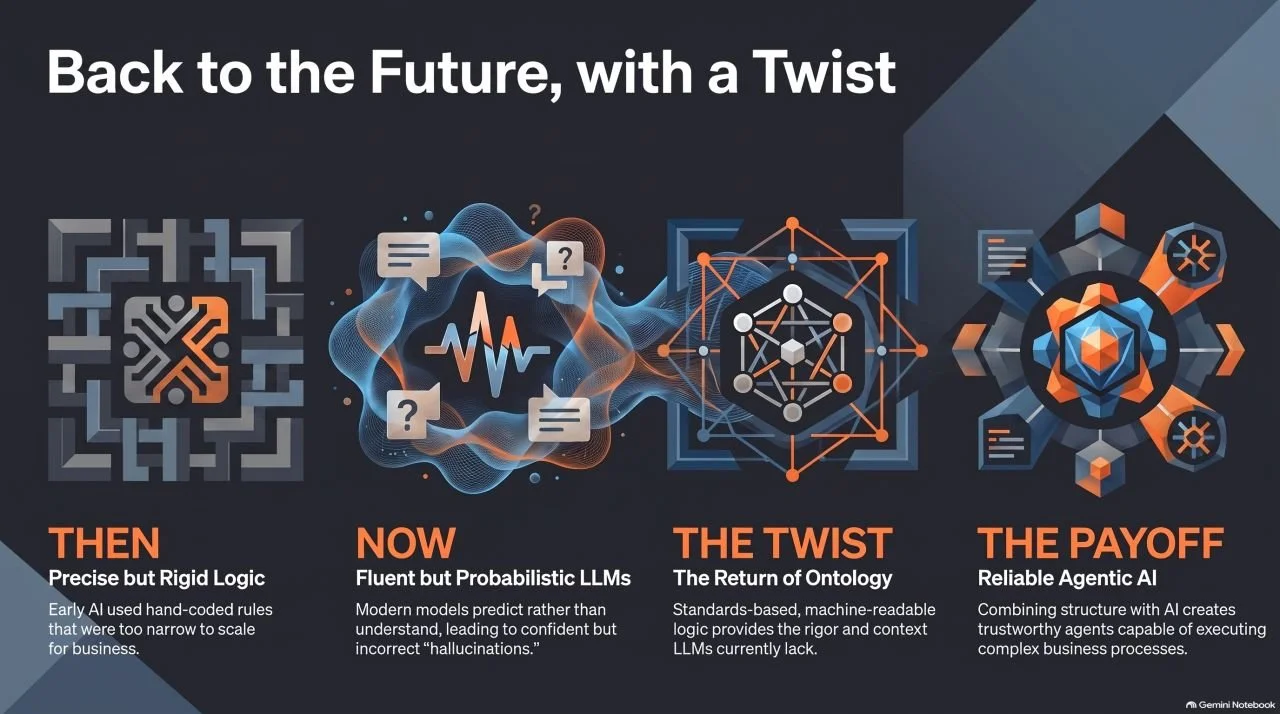
LLM based systems rely on prediction based upon statistical correlations from training data. This is very powerful when dealing with language but less so when we need precision. LLMs struggle with logic, maths and problems requiring a chain of thought. All kinds of workarounds have been developed to break down problems, overcome memory limitations, provide richer context, use specialised systems for parts of tasks etc. These all improve performance markedly, but they do not guarantee reliable results.

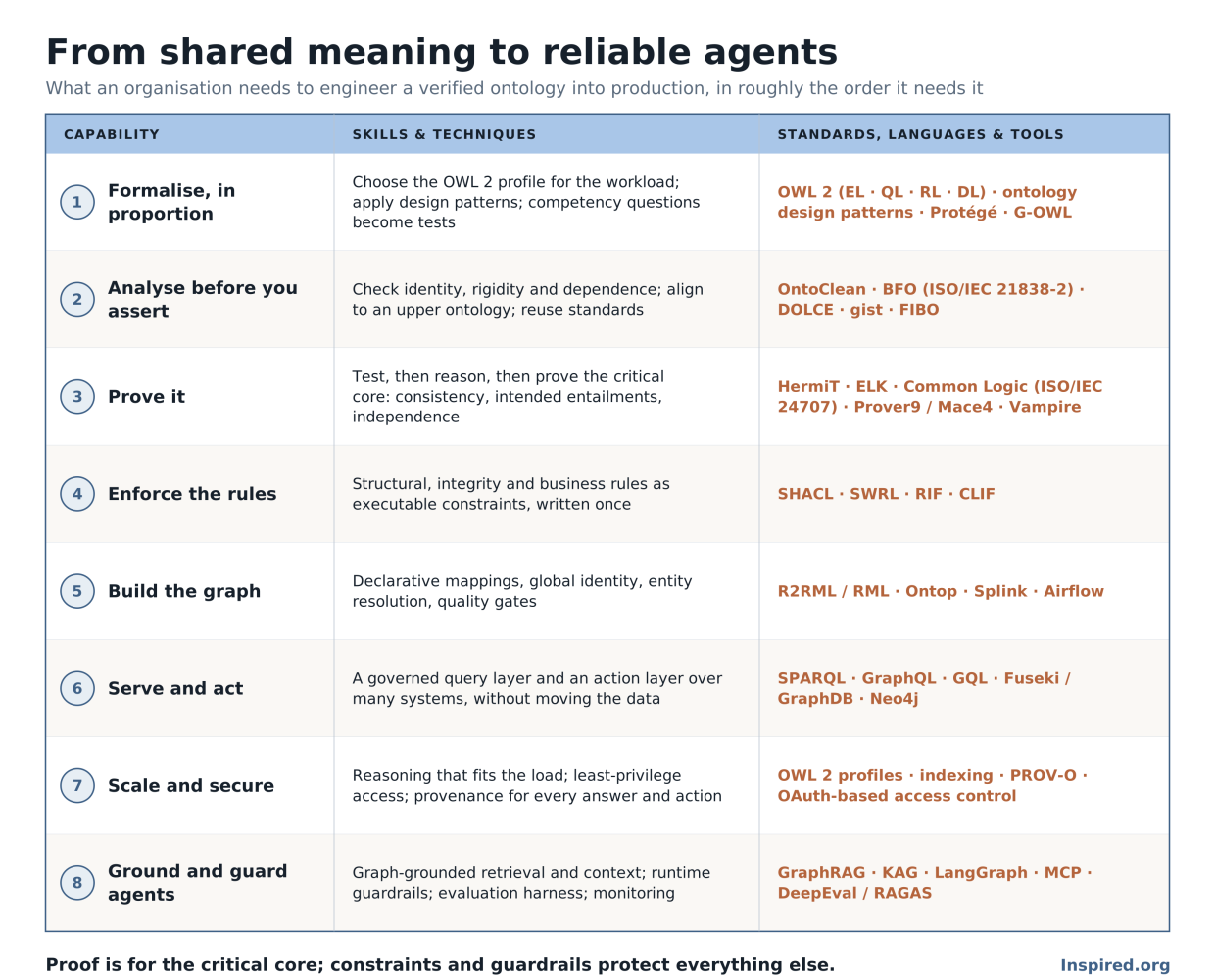
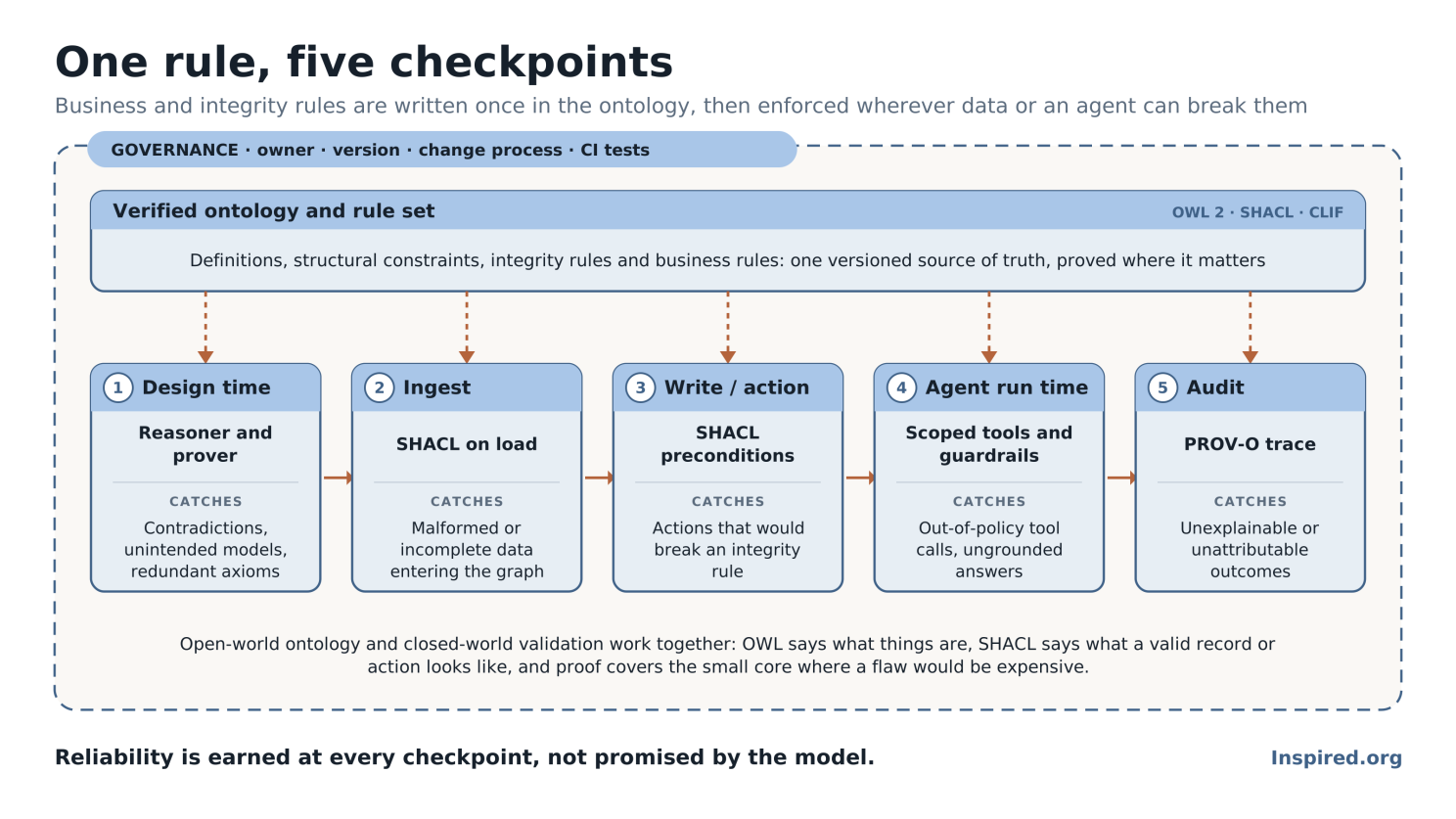
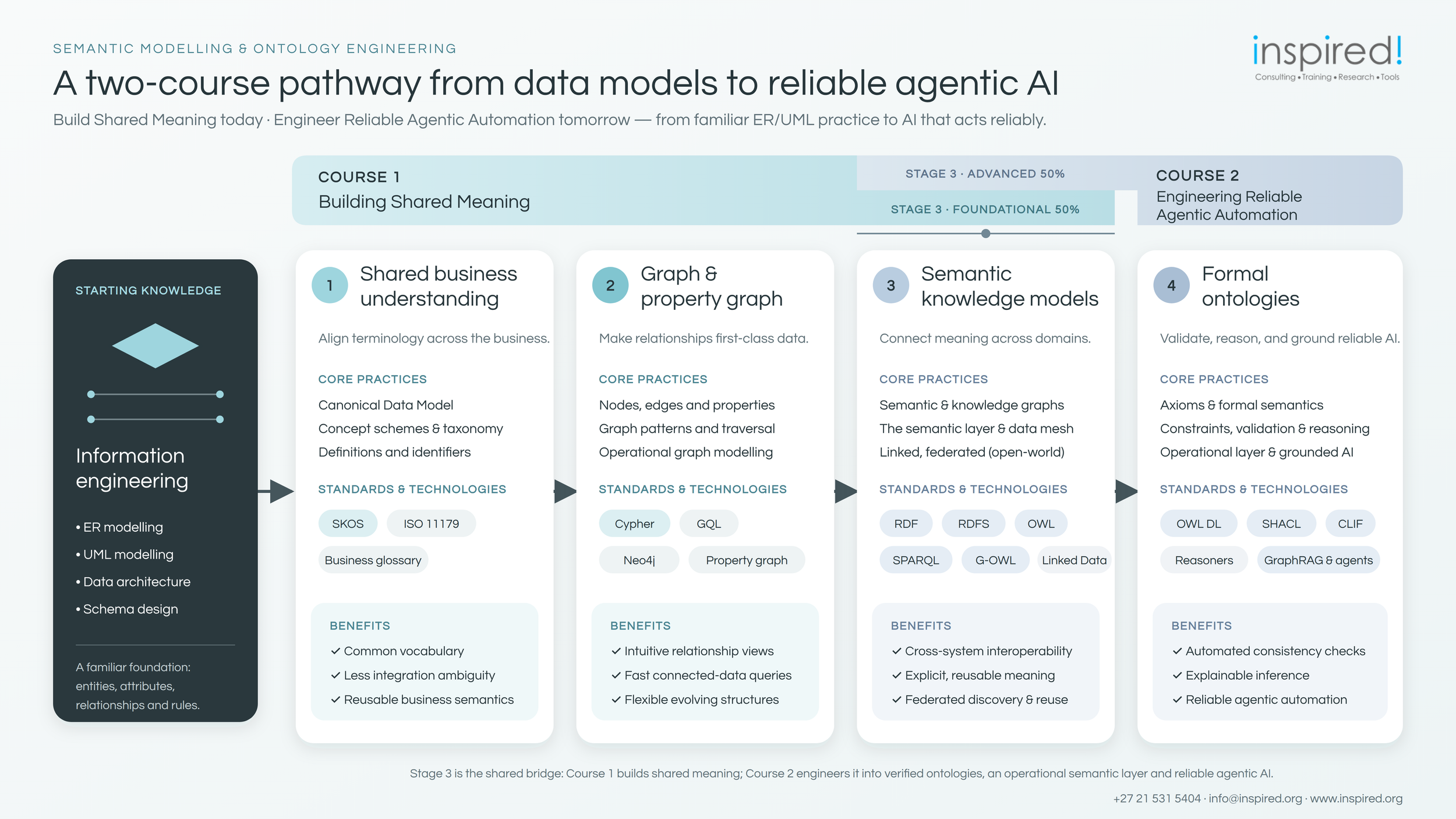
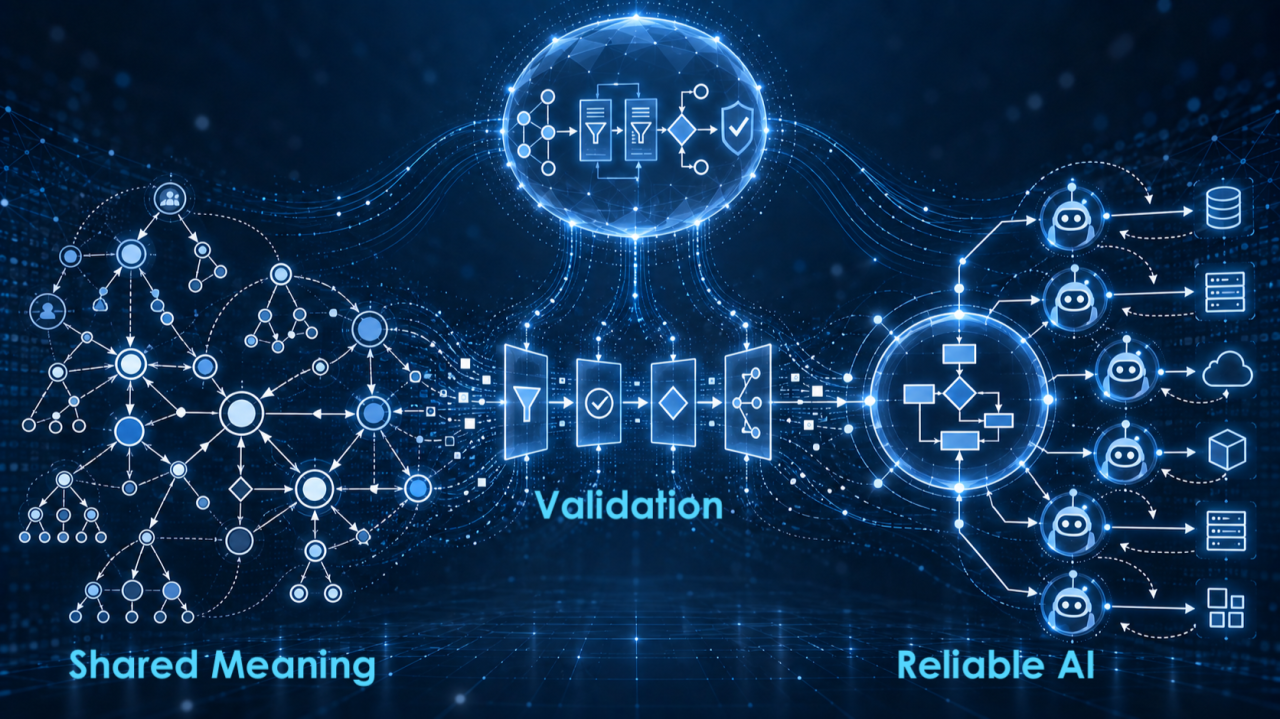
There are different AI models that rely less on syntactics (language) and more on knowledge (ontology) and logic (axioms, rules expressed formally). These systems are not new, but are more difficult to design and take more effort to configure - for example, we need to reach consensus on agreed and capable ontologies in a given domain (e.g. healthcare, manufacturing). Fortunately, these efforts are now starting to pay off, leading to AI systems that are reliable and orders of magnitude more efficient. They can be incorporated into production systems with real time response and little to no human supervision.

Benefits are not achieved by technology alone. We have to employ it properly. This involves selecting the right technology for particular use cases, selecting applications that are within the capabilities available, considering the full architecture of a solution, including:

  • human concerns (roles, safety, desirability, ethics, experience)

  • organisational (stakeholders, goals, customers, offerings, process, resources)

  • systems (functionality, workflow, interfaces, integration, security, efficiency)

  • data (scope, definition, design, sourcing, management, security, privacy)

  • technology (types, integration, standards, infrastructure, performance, scale, security)

  • governance (principles, policy, projects and change, quality assurance, risk management)

So we should remember the adage:

“There is almost always a management solution to a technology problem.
There is almost never a technical solution to a management problem”

AI can deliver enormous benefits, if we use it well. That is the bigger challenge.

Explore more in our upcoming workshop →

AI — Hitching a Ride, or Driving?

Many organisations are still using large language models mainly as conversational advisors. Others are making strategic shifts and using AI to drive deterministic outcomes. In between are many organisations trying to move forward while burning time, resources, patience, and sometimes reputation.

The difference often comes down to skill sets, mindsets, and workflows. The tools are powerful and improving weekly.

Hitching a Ride

To use AI effectively at the conversational level, important skills include:

  • Prompting well

  • Providing the right context

  • Breaking tasks into steps that fit model limitations

  • Choosing appropriate models

  • Guiding the conversation toward a useful result

Typical applications include:

  • Summarising or improving text

  • Generating images or design work

  • Accelerating research

  • Creating presentations or communication artefacts

  • Getting business or product advice from a “virtual board”

Most workflows here occur through chatbot interfaces such as ChatGPT, Claude, or Gemini. It’s a bit like discussing ideas with a knowledgeable colleague or delegating work to a capable intern.

Driving

At the next level, things change significantly:

  • Moving from advice and text transformation to action

  • Using agentic tools that can execute tasks: generate documents, presentations, code, tests; create files; update codebases; run tests; integrate applications; and perform transactions

Tools such as Microsoft Copilot, Claude Code / CoWork, and Gemini Enterprise support this through:

  • APIs for integration into applications and workflows

  • Desktop, browser, and mobile clients for defining and managing agents

  • Parallel goal-seeking agent workflows that can run for extended periods

  • Permissions allowing agents to interact with local systems, operate services, and perform transactions

Many of these tools rely on Model Context Protocol, which enables interoperability between AI systems and traditional software.

Skill sets for this level shift toward strategy, architecture, design, management, and quality assurance — much closer to executive and organisational capability.

It also opens the possibility of embedding AI directly into core operational capabilities, requiring careful choices about application areas, technologies, and organisational change.

Moving Beyond LLMs

Large language models are fundamentally prediction machines trained on large public corpora such as literature, the internet, and social media. Their answers reflect averages and biases in that material, and they can hallucinate — producing plausible but incorrect responses.

This can work where humans remain in the loop. It is far less suitable where reliable automation of operational tasks is required.

For deterministic outcomes — and lower compute consumption — we will increasingly need other forms of AI based on ontology and axioms.

More on this in the next post.

Read about our upcoming workshop here.


Architecture of AI: Navigating Today’s Accelerating Capabilities

We have hit an inflection point in AI capabilities. AGI? No. Usefulness ++. Capability much higher than you think… Risk, absolutely.

We have been researching, analysing and preparing for our upcoming workshop Architecture of AI | Architecting for AI. Things are moving fast, and accelerating. Many things I would have said ”Nah, not really” to in November are now firmly a “Yes, provided you do it right”.

Several trends and developments are converging in powerful ways:

  • Foundation models have become very good at understanding language, both input and output

  • Smaller, cheaper, local and on-device models are now very capable for particular applications

  • Agentic capabilities are maturing and allowing models and tools to act instead of just inform or advise. They also allow spawning multiple long running, goal seeking tasks in parallel

  • Natural language interfaces, both written and spoken, are dissolving UI barriers across productivity software, technical environments (operating systems and development tools) and enterprise software (ERP and SaaS). Users can now build complex workflows across heterogeneous environment without technical specialists

  • World View models are maturing - endowing AI systems with 3D real world knowledge and enabling them to operate in the physical world (Robots, androids, self driving vehicles)

  • Tools for developers are growing up fast, integrating tightly into toolchains, local file systems, remote code repositories and deployment infrastructures. A select few shops are getting massive productivity gains, while others are finding AI slows productivity! The difference is in the lifecycle, workflow and skills. The benefits are achievable, but not easy to realise

  • Ontologies and formal logic are underpinning next generation AI systems that will provide deterministic behaviour, eliminating hallucinations, while improving efficiency by orders of magnitude

What we are seeing is a plethora of power tools. There are titanic battles taking place for infrastructure, market share, capabilities, emerging “standards” and dominance. It is an exciting but dangerous time. To use an analogy of carpentry: power tools will allow some to build houses twice as fast, while others may chop off limbs.

At an individual level, the risks are mainly to privacy, accuracy and productivity. At a corporate level there are major security, privacy, intellectual property, reputation and competitive capability risks. There are grave dangers of enterprise architectures, policies and governance unravelling. OTOH there are massive opportunities that we cannot ignore without losing competitiveness.

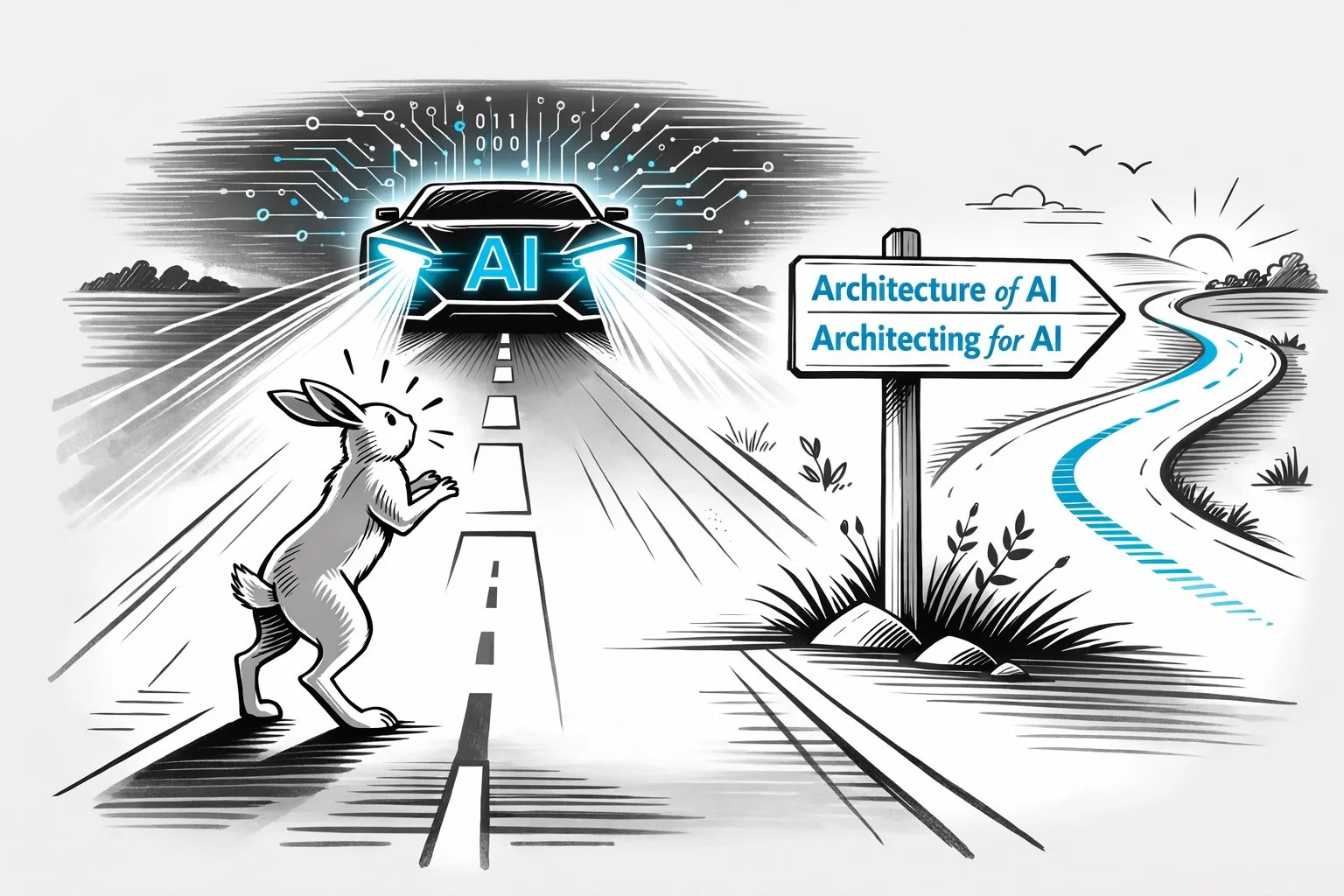
Today’s rabbit picture suggests that we should at least hitch a ride, rather than getting run over or plodding through the landscape. Join our workshop coming up on 23- 24 March to see how →

Watch this space for the next instalment!

Introducing Architecture of AI | Architecting for AI: 2-day workshop

We are thrilled to be working with Jay van Zyl and ecosystem.Ai to bring you an essential workshop - Architecture of AI | Architecting for AI

Many organisations we talk to are convinced that they will need to take advantage of AI to remain competitive and agile. At the same time, given the pace of developments, most are not sure what the capabilities of current AI are, what application areas to tackle, which AI systems to use, or how to architect solutions that will deliver value and be sustainable.

Jay van Zyl brings immense experience of working internationally, architecting products and developing world leading recommender systems now deployed at major banks, telcos and retailers. ecosystem.Ai is also at the forefront of using AI internally to develop their own products and recently released their own AI coding and deployment platform.

My colleagues and I (Graham McLeod) at Inspired.org have led in integrated business and I.T. strategy through holistic architecture frameworks, methods, language and tools for over a decade. We advise leading corporates on digital transformation and operating models. Inspired uses AI to assist with enterprise modelling, ontology, consulting, research and marketing.

Together we will:

  • Explore the state, architecture, capabilities, risk and implications of current AI offerings

  • Identify which types of AI are suited to what applications, with examples and case studies to illustrate

  • Cover the organisational, societal and business implications of AI

  • Unpack what it takes to architect for successful deployment of AI and related technologies, including:

    • Principles and policies

    • Governance, skills, capabilities

    • Data preparation and training

    • Choice of application areas and suitable AI types, models and products

    • Business case development

    • Training and execution/inferencing infrastructure

    • Integration with other applications and services

    • Risks and amelioration

    • Scaling and continuous improvement

Don’t miss it!

Read more and reserve your place now →

Business Architect Capabilities - Revised Scorecard

We are encouraged to see many more job advertisements seeking Business Architects. The role now seems well established as senior, strategic and value adding in most leading corporates and quite a lot of government and non-profits.

There is still not total agreement on what capabilities, skills and knowledge a business architect should have in the industry.

In 2021 we developed a competence survey which probed the dimensions which we believe are necessary for high performance. This has been taken by over 1000 respondents. We revised that in March 2025. We have again tweaked it slightly based upon feedback to make it a bit easier to answer.

Take the free assessment here →

EDGY Support in EVA

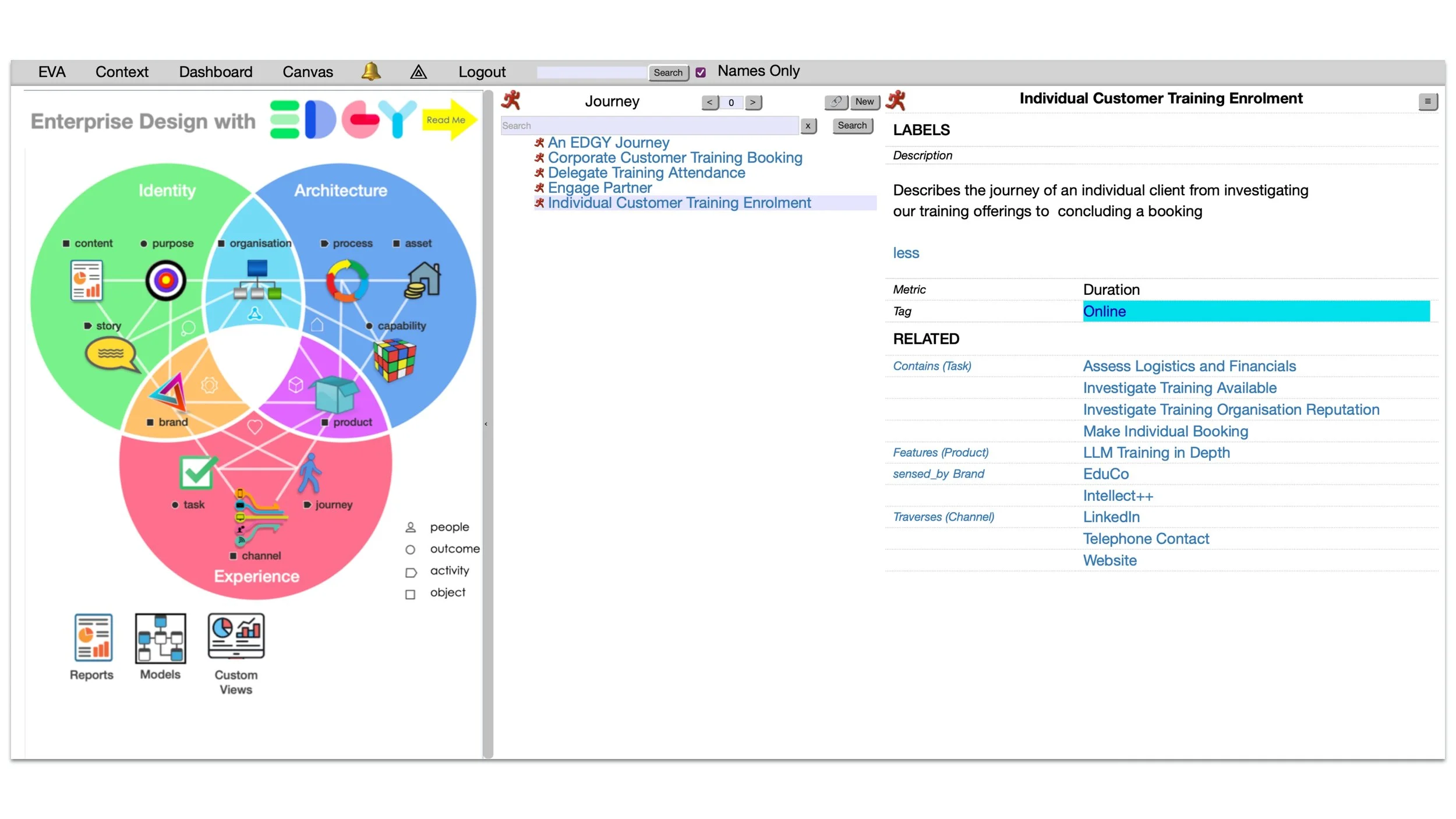
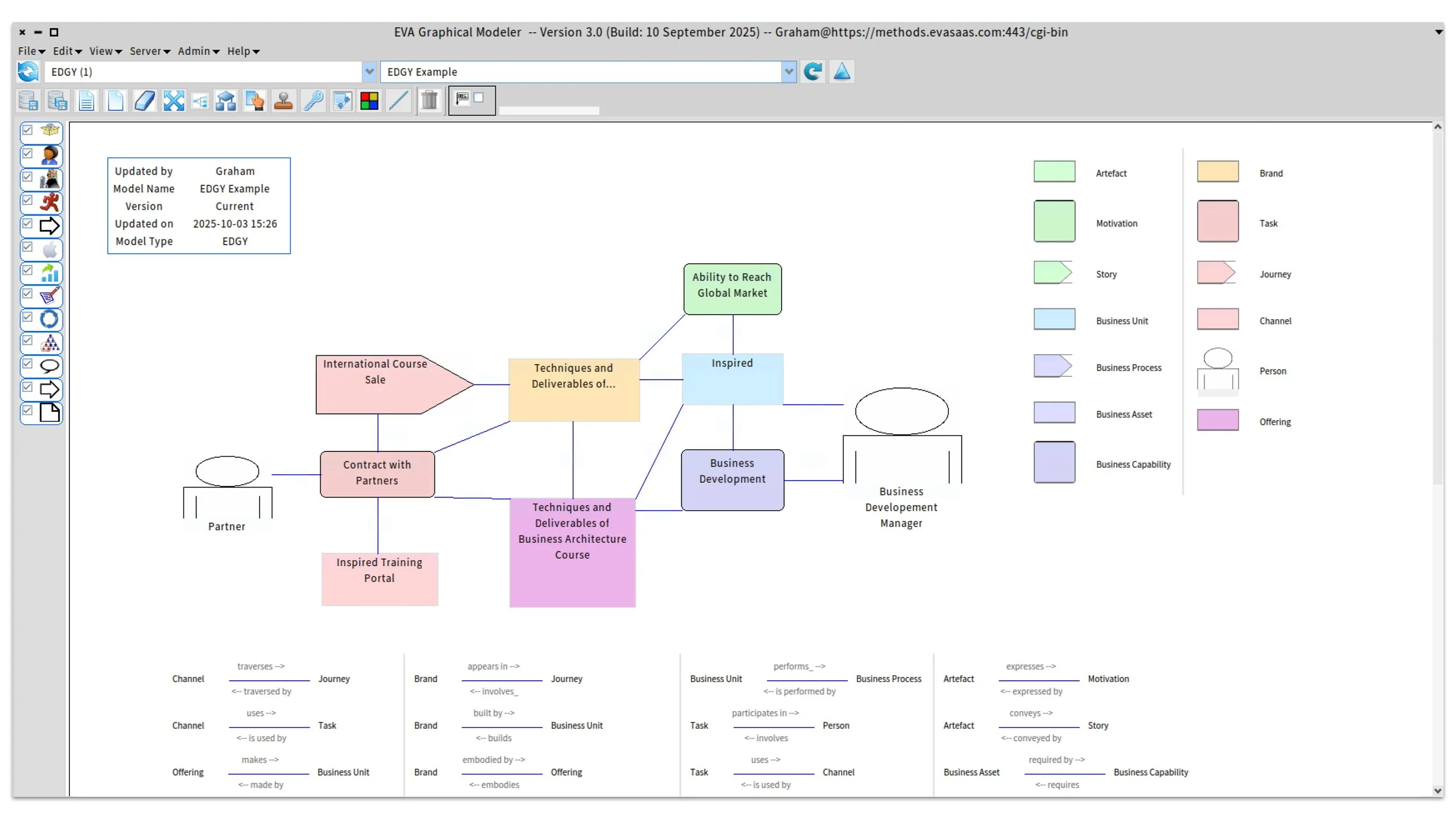
EDGY is an innovative and light weight approach to Enterprise Design which rapidly gained ground in Europe and is spreading quickly to other regions. There is an obvious overlap with our approach to Business Architecture based upon our Holistic Architecture Language (HAL). We like to ensure that we are not missing anything critical, so we review emerging approaches. We found a high correlation between our approach and models and EDGY. We did like the simple way in which EDGY is presented. There is good online methods guidance and sample models, making it accessible. Training is being offered. There is currently very limited tool support for EDGY.

Our Enterprise Value Architect (EVA) Platform and HAL models allow us to support multiple frameworks and perspectives, so we added support for EDGY.

This includes support for the EDGY meta model (concepts, properties, relationships), the EDGY navigation map, EDGY based graphical models, canvasses for each EDGY facet and online reference for EDGY itself.

Using EVA as a platform automatically gives us a multi-user environment with secure repository, web UI, Reporting, Search, Import/Export and many other capabilities.

Integrating EDGY requirements with our comprehensive HAL models allows extending from Enterprise Design as covered in EDGY into related domains (e.g. Application Architecture, Information Architecture, Enterprise Risk, Programme Management) seamlessly.

Please message or eMail me if you would like to be on the list for early evaluation access.

Background and further information

EDGY Approach
HAL Holistic Architecture Language (Integrated meta model)
EVA Enterprise Value Architect Tool Platform
View demonstration of EDGY support in EVA

Wardley Maps in EA

Pleased to confirm I will be presenting a paper on support for Wardley Maps in our Enterprise Value Architect (EVA) tool platform at the Practice of Enterprise Modeling (POEM) conference in Geneva, 3rd-5th Dec.

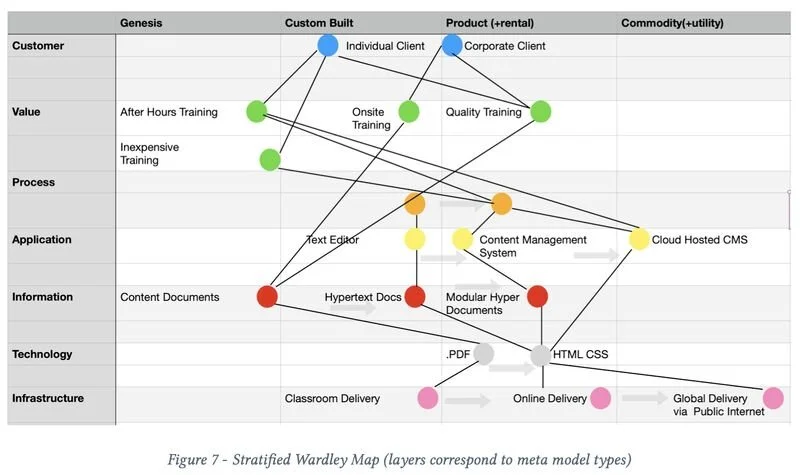
The paper details how we were able to rapidly adapt our Holistic Architecture Language models in EVA to support the Wardley Map concepts and requirements, as well as adding support for the graphical notation in the Graphical Modeler.

Wardley maps add a key dimension to strategy and enterprise/business architecture by providing a time/evolution dimension to various elements, including products, services, support systems and technology. They facilitate examining how key elements will evolve during the planning horizon and assist in anticipating road blocks.

The paper also suggests how integrating with the broader EA models adds rigour and value to the Wardley Maps themselves.

You can read the paper here.

From the abstract:

...The paper discusses why Wardley Mapping is a good complement
to EA models, how Wardley Mapping can be integrated with EA and the
advantages that this can realise. It offers potential extensions to Wardley Maps
and a meta model fragment to integrate maps with the EA world.

More on EVA here →

Watch the webinar with Simon, the creator of Wardley Maps →

More on Wardley Maps in general →

Raising Capabilities for Desirable Change

We recently wrapped up the 3-4Q 2025 programme of our Business Architecture Mastery Programme with excellent feedback from a strong cohort. This programme has now trained over 100 senior Business Architects to a mastery level. If we add to that the 230+ individuals who attended our five day Techniques and Deliverables of Business Architecture course, that is a significant contribution to building serious business architecture / digital transformation skills and capabilities.

We are now accepting enrolments for the first cohort in 2026 which will run from 26th March to 9 July 2026. Sessions take place for 3.5 hours each Thursday. Full details can be found on the course page here. Book now to lock in 2025 pricing and early bird discounts.

If you are not ready for the full high level programme yet, consider the Techniques and Deliverables of Business Architecture course.

Lets make a bigger, better difference in 2026!

Business Architect / Digital Strategist Competence - V2

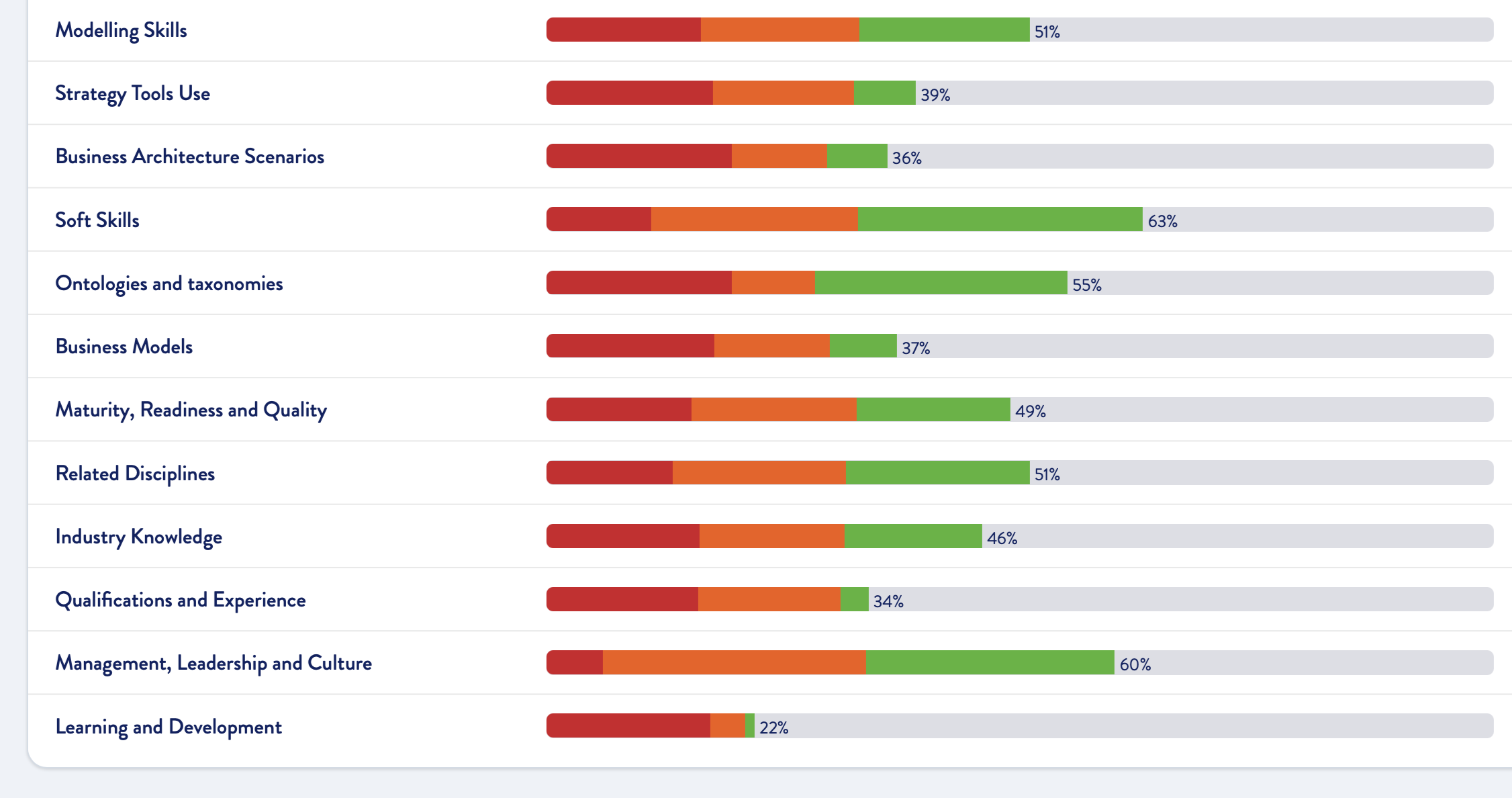
Our 2021 BA Scorecard assisted aspirant/current BAs to assess their capabilities. Of 2256 visitors, 917 proceeded to the scorecard. We just updated the Scorecard to V2.

Take the revised survey here

Some insights from the original in the graphic below.

  • Overall scores balanced: Low 34%; Medium 50%; High 17%, indicates that most participants need further skill development. Expected as the cohort is keen to transition to a professional business architect role.

  • Lowest score categories: Learning and Development; Qualifications and Experience; Business Architecture Scenarios.
    Few individuals/employers commit enough time and effort to growing skills necessary to maintain competence in this fast evolving discipline. More formal training and certification needed. BA is a young discipline, so experience levels are low relative to other fields.
    BA Scenarios are uniquely covered by the Business Architecture Guild, so many are not familiar with these

  • Highest score categories: Soft Skills; Management, Leadership and Culture; Ontologies and Taxonomies.
    Augers well for attention to people, organisation, stakeholder management and communication aspects required of BAs. Participants are relatively senior and have gained important skills in their current roles.
    Good appreciation for the value of ontologies/taxonomies and meta models to structure work, gather information, assess maturity and achieve integration

  • Good capabilities found for: Related Disciplines; Modelling Skills; Maturity, Readiness and Quality.
    Good knowledge of related disciplines can support alignment and communication.
    Familiarity with some modelling paradigms/techniques, but few participants with the broader set available.
    Fair use of maturity models and QA techniques.

  • Modest capabilities for: Strategy Tool Use and Business Model knowledge.
    Strategy Tools use was quite low, reflecting the state of BA, often seen as a progression from EA, with strong I.T. / I.S. emphasis. Most practices today have an internal focus. The scorecard reflects our view that BA involves the design of future business and requires high competence in strategy tools, business models and awareness of contextual factors

What have we changed?  We kept the broad structure and categories with relatively small adjustments. We did extract some core competencies into a new category labelled “Modes of Thinking”. Some detailed changes:

  • Broke up a question which reduced completion

  • Combined some separate questions into multiple selection questions to save time

  • Added the Modes of Thinking category

  • Explicitly included Change Management

  • Added Wardley Maps

  • Provided examples to clarify some questions

  • Added AI Reference Model

  • Refined question around Solution Delivery Approach

  • Tweaked balance of scores to reflect needs across categories

Graphic below shows categories assessed and relative scores.


Take the revised survey here

Feedback is welcome! Send us your thoughts at BASurvey@inspired.org.

BA Forum Webinar: Integrated Business and Enterprise Architecture Planning with HAL 2.0

Date:

Time:

Cost:

Presenter:

Venue:

1 October 2024

14h00 - 15h00 SAST / 12h00 - 13h00 UTC

Free

Graham McLeod

Zoom (link provided on registration)

The Holistic Architecture Language (HAL), now at Version 2.0, is Inspired’s integrated language and meta model supporting strategy, business and enterprise architecture, risk and change management. It has evolved over two decades and was revised in 2014, 2019 and again earlier this year. It is now arguably the most comprehensive, integrated model available globally.

It has been benchmarked against popular EA and Business Architecture frameworks, as well as lesser known, but academically rigorous, frameworks and models.

Graham McLeod, Chief Architect at Inspired and the primary author of the language, will cover:

  • Why we need such a language

  • How it was developed

  • What it covers

  • Advantages and benefits

  • Support in tools

  • Further information available

The talk will be approximately 35 minutes, with adequate time afterwards for questions and discussion.

Please register to join us!

A visit to Lille for ESUG and IWST

I spent a week in Lille, France, where the European Smalltalk User Group conference (ESUG) was held at Inria/Lille University. This was in parallel to the International Workshop on Smalltalk Technologies (IWST). Lille is a beautiful city with historic Art Nouveau and Victorian era districts, but also stylish modern developments. It has a mix of northern French and Belgian culture, food and drink.

Despite the age of Smalltalk, it is still one of the purest, most productive and cleanest languages and tool environments for doing complex stuff reliably. We have used it in our tool development since the mid 90’s and see no reason to change.

ESUG brought the community together across Europe, but also the Americas and even a couple of Africans. A great deal of innovative work was on show and there is no shortage of interesting products, libraries, techniques and evolution to address new computing models and requirements. Standout items for me included:

  • Continuing rapid development of the Glamorous Toolkit platform by Feenk which now hosts multiple development languages seamlessly, integrates with the Gemstone Object database and AI language models and allows developers to extend the tool itself with minimal effort

  • Multiple Smalltalks that will run in the browser, either targeting the Javascript VM, transpiling to Javascript, compiling to web assembly, or running on smalltalk specific browser plugin VMs.

  • High quality, cross platform modern widgets and controls via Toplo, which leverages BLOCK and supports SPEC 2.0 UIs

  • Many projects which target and improve testing, debugging and monitoring

  • Support for Virtual Reality and Augmented Reality

  • The usual rapid evolution of major implementations such as Pharo (open source) and VAST (proprietary). Key themes include Unicode, stability, performance and interoperability

  • Work which is keeping up with latest developments in virtual machines, memory management, garbage collection, just in time compilation and other techniques required for robust, scalable and performant systems

In the IWST workshop, I presented a paper on the work Gareth Cox and I did on creating a Graphical Language Server in Smalltalk (previously only done in Java and TypeScript). Glad to say this achieved an award for innovation and 3rd rank overall, which was pleasing for a modelling oriented paper in a primarily computer science workshop.

In the paper we were able to show how working at a higher level of abstraction and in a dynamic language allowed us to do more than the reference implementation in a fraction of the source code and memory footprint. You can view the presentation or read the paper.

Thanks to all the organisers for a great conference and workshop.

Enterprise Modelling at Duisburg-Essen University

I recently had the privilege of visiting this leading group for a week. We exchanged ideas, experiences, critique and camaraderie. I presented my work on design and support of effective visual modelling languages, while local participants provided insights into work on multi-level modelling, generation of multi-level models from more conventional models and supporting tooling.

The team is led by Prof Ulrich Frank and has a deep history and impressive track record in enterprise modelling, meta modelling and multi-level modelling. One product of this research is Multi Perspective Enterprise Modelling (MEMO), a meta modelling foundation and several integrated modelling languages which address strategy, organisation, goals, process, information and other aspects crucial to enterprise success. This has been one of several motivations behind our own Holistic Architecture Language and integrated Strategy and Enterprise Modelling approach.

The group collaborates with Prof Tony Clark at Middlesex University, North London on multi-level modelling, language design and tool development. Part of this work is the development and evolution of the X-Modeler, an innovative modelling and language execution platform. This work is one of the sources informing our own meta modelling approach.

Personally, I met Ulrich at my first international academic conference, and the first instance of the European Conference on Information Systems, at Henley on Thames, in 1993. His work and a subsequent visit to the Gessellschaft fur Matematik und Datenverwerking (GMD) research institute in Cologne (Koln) inspired much of my early research and provided validation of ideas I and colleagues were working on less formally.
We share a lot of common understanding, beliefs and approach to methods, models and modelling, tool building and what is important to the effective use of models.

Thanks to Ulrich and the group for their sharing and hospitality. Long may our fruitful interaction continue!

Inspired Holistic Architecture Language© Vsn 2.0

Holistic Architecture Language Van 2.0 - Top Level Executive view

Since the introduction of the Holistic Architecture Language in 2019, we have gained a great deal of experience in its application as well as conducting in depth academic research. These activities have allowed us to refine the meta models to more completely integrate strategy, business architecture, IT architecture domains and the change dimension. We have also expanded coverage to include more project stakeholder management and support for scenarios.

We benchmarked the leading and most popular EA, Business Architecture and Enterprise Engineering methods and models to ensure that we were not missing anything important. We checked that we could support the new versions of TOGAF® Framework and ArchiMate®. In this exercise we again became convinced that the HAL models are the most comprehensive, consistent and integrated available.

We took the opportunity too, to ensure that the models will support all the deliverables, models and analysis products that we cover in our Business Architecture/Desirable Futures method as covered in the Techniques and Deliverables of Business Architecture course and the Business Architecture Mastery Programme and which we apply in practice in client projects.

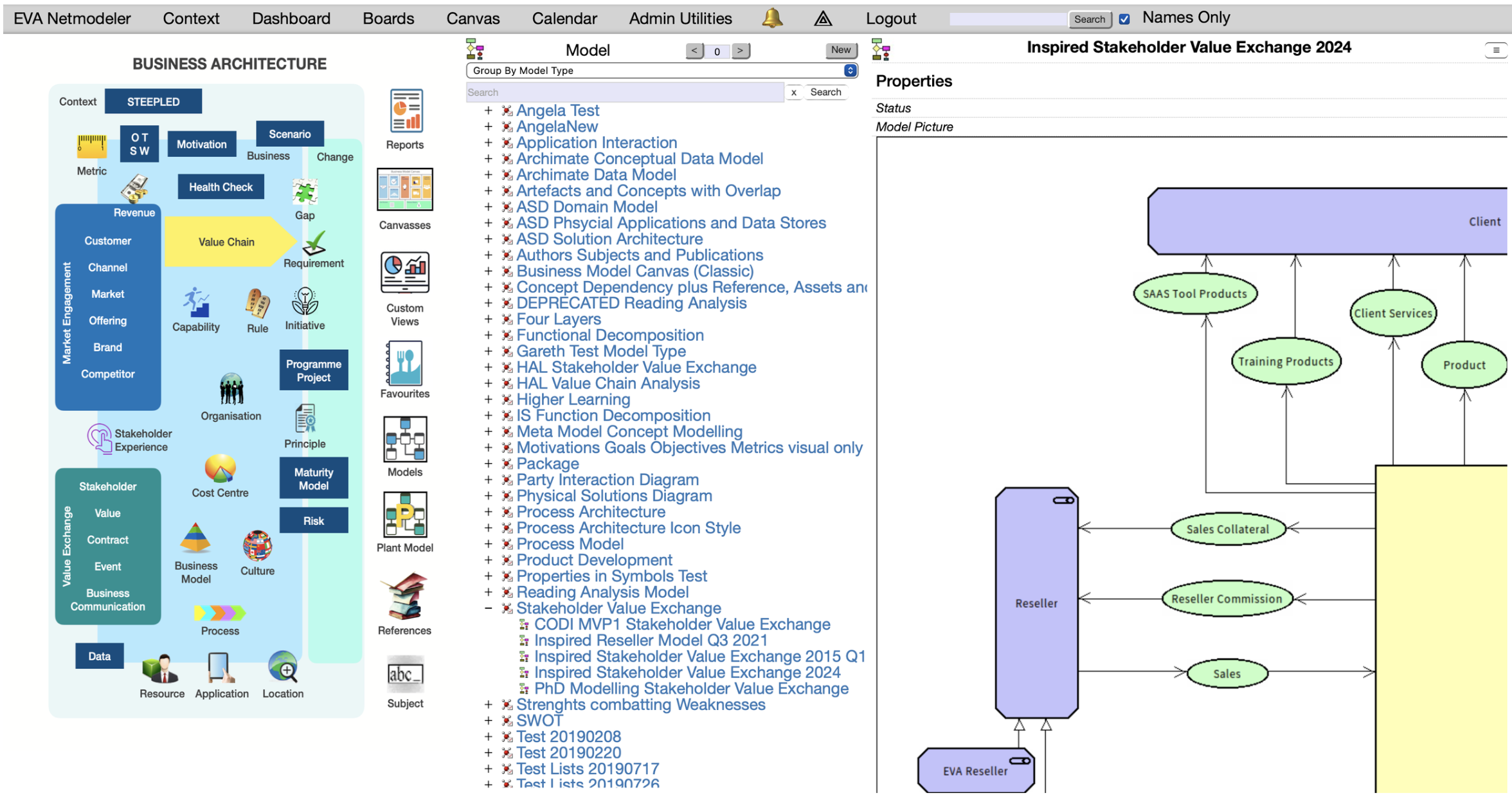
We are working to support the new models in EVA, with intuitive dashboards and canvasses, making the use of the models much easier for novices and experienced architects alike.

EVA Dashboard for Business Architecture

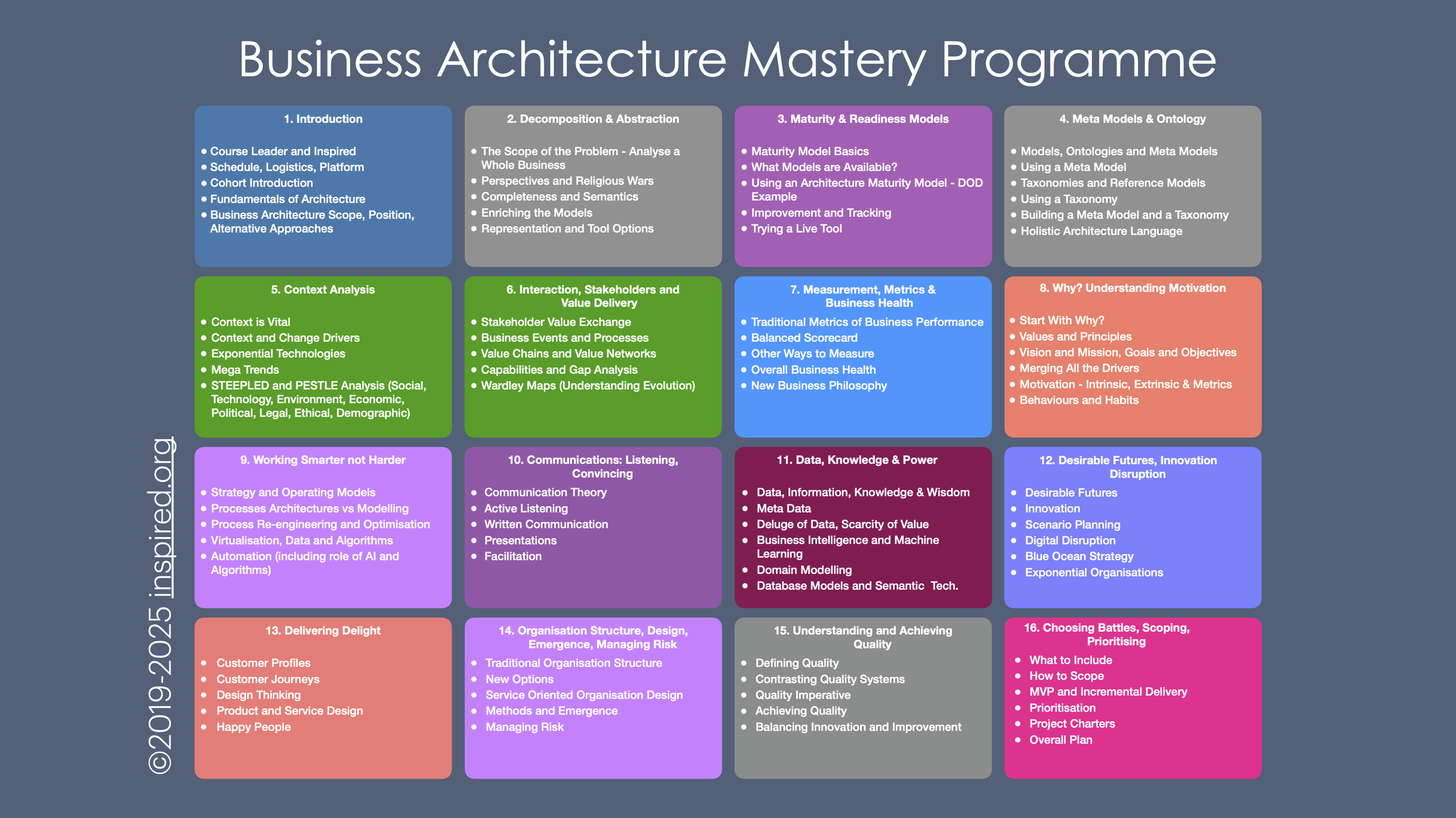
Advanced Business Architecture Skills by 2024! Transform your skills to a leadership level in 16 weeks

WEEKLY LIVE SESSIONS Thursdays 14:00-17:00 SAST / 12:00-15:00 UTC VIA ZOOM FOR 16 WEEKS

An intensive online programme to help senior enterprise and business architects, strategists and business analysts quickly and competently analyse a business, make well founded recommendations for transforming it, ensure stakeholders' buy-in, and mobilise for implementation.

Includes thought leadership in integrated meta models, stakeholder modelling, process architectures, integration of strategy, architecture and programme management.

LEARNING OUTCOMES

  • Rapidly identify the real strategic issues

  • Transform your own capabilities, then your organisation or client

  • Develop the skills to be at the table where strategic decisions are made

  • Have a real positive impact on your organisation, industry, customers, and other stakeholders

  • Engage thoroughly with business executives in a way that they appreciate

  • Exploit change and emerging technology to your advantage instead of suffering its effects

  • Become a valued change agent in your organisation and industry

  • Understand powerful meta skills that you can apply in countless situations, techniques and throughout your career

UNIQUE COVERAGE

The course links Business Strategy, Business Architecture, Implementation Architectures, and Programme Management.

It goes beyond TOGAF®, Zachman, BizBoK, Business Model Canvas (Osterwalder & Pigneur), Enterprise Engineering (Dietz et al), ArchiMate®, and others in addressing the context in which business finds itself and the many dimensions that must be integrated to make informed coherent decisions to achieve desirable futures.

It includes techniques to facilitate innovation, design business operating models, customer journeys, ground breaking products and services and exploit digital transformation, including AI.

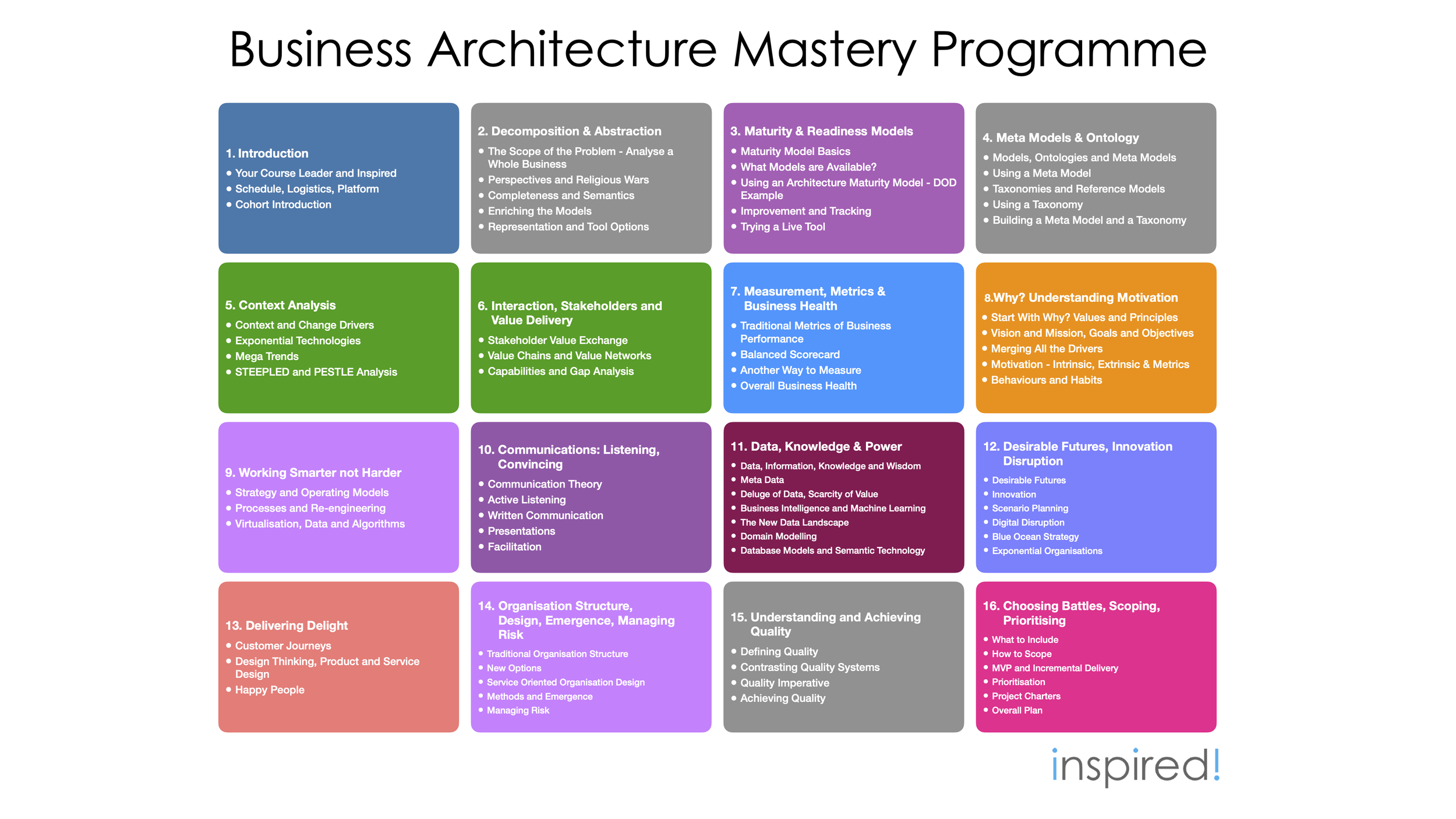
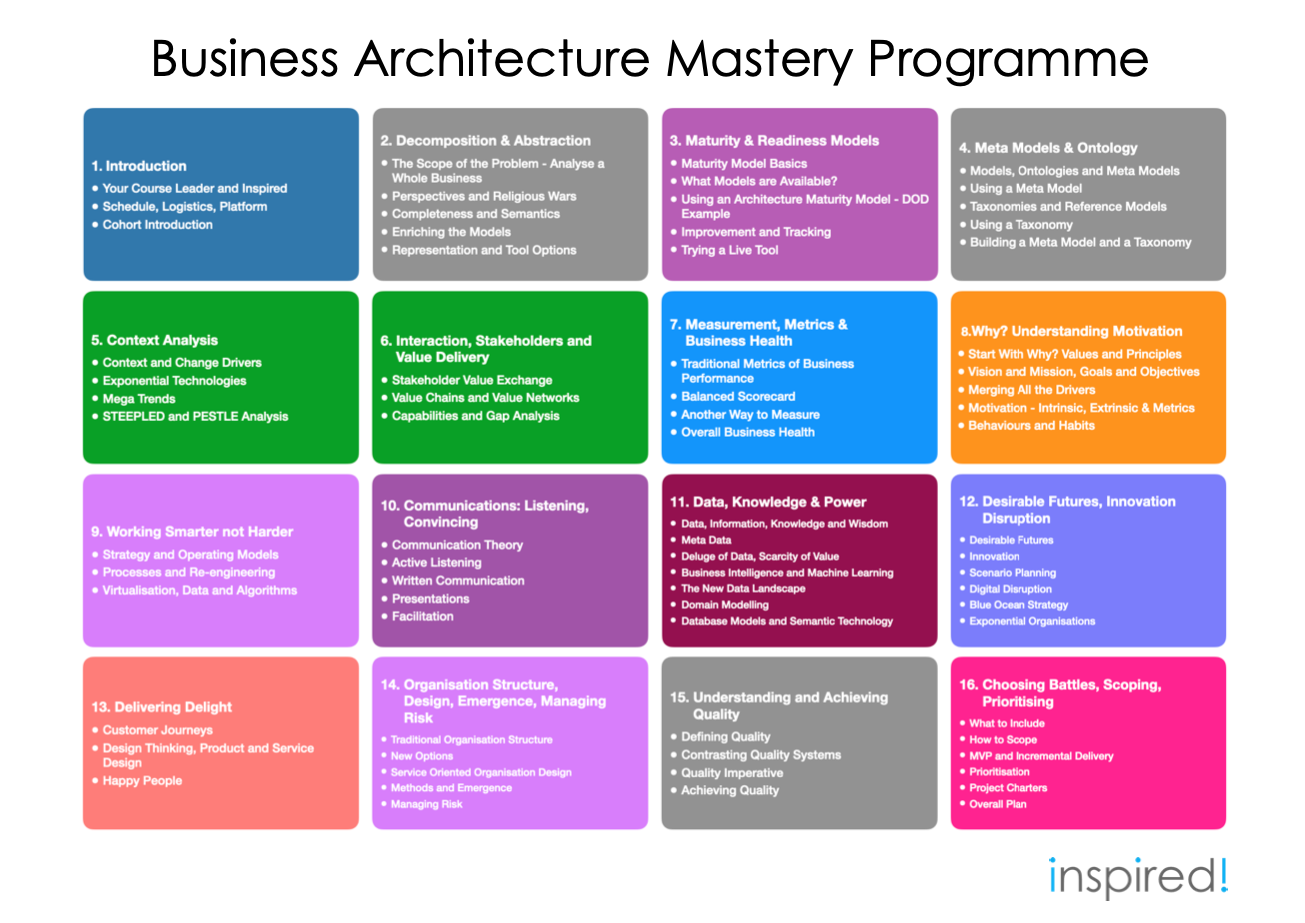
SYLLABUS

See graphic above or visit the course page.

APPROACH

Online, via Zoom with interactive discussion and breakaway groups. Half the time is "hands on" with individual and group assignments to apply concepts and techniques. Rich use is made of case study material allowing students to apply concepts through a full lifecycle.

Extensive notes are provided and enrichment via short videos, provided articles, references and links. We provide a comprehensive eBook on Business Architecture.

Read more and enrol here.

"The course was well managed with materials at a similar quality to that of Oxford University. The subjects covered extend beyond the traditional content that you would expect - to starting to think outside the box, different perspectives, what matters to the design of a business and its people… If you are looking for a course that will introduce you to some of the latest research in this field and beyond, I would highly recommend this course.”

TOGAF® & ArchiMate® registered marks of The Open Group
#businessarchitecture #strategy #training #enterprisearchitecture#digitaltranformation

Business Architecture Mastery Programme Kicks Off

We are about to start our next Business Architecture Mastery Programme this Thursday (26th). It runs for 16 weeks until 11th May. We have an excellent cohort and it promises to be another great experience.

This time round we have added new material on how AI and related topics will impact business plans and architectures, as well as how to use Wardley maps to leverage the projected lifecycle of technologies in our forward planning.

Some comments from the delegates:

“Business Architecture is a lot more than just identifying capabilities and modelling. I really appreciated how it brought a wide breadth and depth of concepts together that illustrated what Business Architecture actually entails and what impact it has.”

“Very comprehensive set of techniques and best practices, one of the main benefits was drawing on [Graham's] wealth of experience and wisdom and really learning from the examples presented.”

“[The programme] has given an overarching view of all of the different elements that need to be set up as the organisation is growing and expanding... what are these elements that we need to put in place and consider if we want to grow in a very healthy way.”

“I also think that your course is very well-structured and it leads you over different aspects of the business architecture work and it was a pleasure for me. And thank you and all of the others attending the course, thank you.”

“So as key takeouts I will take these tools that you’ve not only presented to us but managed to teach us how to use them because most of the courses only present the tools and don’t give the chance to implement these tools and find a way to use them in your daily work.”

We believe this programme is the most comprehensive yet practical available. This was borne out by very positive comments from some very seasoned attendees who still derived major value and gained new insights. It runs over 16 weeks with a half day live session each week.

For full details please see the course page.

#businessarchitecture #strategy #enterprisearchitecture #ai #training

Practice of Enterprise Modelling (POEM)

I am at Heathrow, returning from the UK and the POEM Conference, hosted by Middlesex University. First international trip since the pandemic and it’s great to get out and about again!

The nature of “Enterprise” has changed from the simplistic company or organisation to diverse concepts, including:

  • A legal entity

  • A commercial, government or not for profit entity

  • An extended value chain of partners and potentially, customers

  • A project to bring about some desired change

  • A value adding operating model, possibly including algorithms,AI and platforms that deliver value

Which can pretty much be summarised/abstracted as “any coordinated effort that results in value delivery”.

The activity of modelling is also under the spotlight, changing and being asked to justify its existence. With the speed of business change and the promotion of agile approaches, modelling is often pushed aside, regarded as old fashioned or not adding sufficient value. Of course, many of these projects and transformations subsequently come to rue that decision. Nevertheless, I was pleased to see a recurring emphasis at the conference on ROME, i.e. Return on Modelling Effort.

ROME looks at who models are for (stakeholders), what they are intended to achieve (goals, e.g. understanding, insight, consensus, decision support, design) and how effective and efficient they are in achieving that. We look for techniques to improve the value of models, including:

  • Properly understanding stakeholders, concerns, goals & domain of interest

  • Choosing, adapting or designing modelling languages and notations to suit the problems, domain, process and stakeholder goals and capabilities

  • Improving efficiency and reducing effort by using automated information gathering (e.g. mining), inferencing algorithms, effective notations that exploit human visual and cognitive capabilities

  • Tools that support design of modelling languages, importation/capture of relevant data, analysis, visualization, design, verification, collaboration in effective and efficient ways

Many of the presentations at the conference addressed these issues.

Other themes which were prominent and recurrent were Digital Twins and Ontologies.

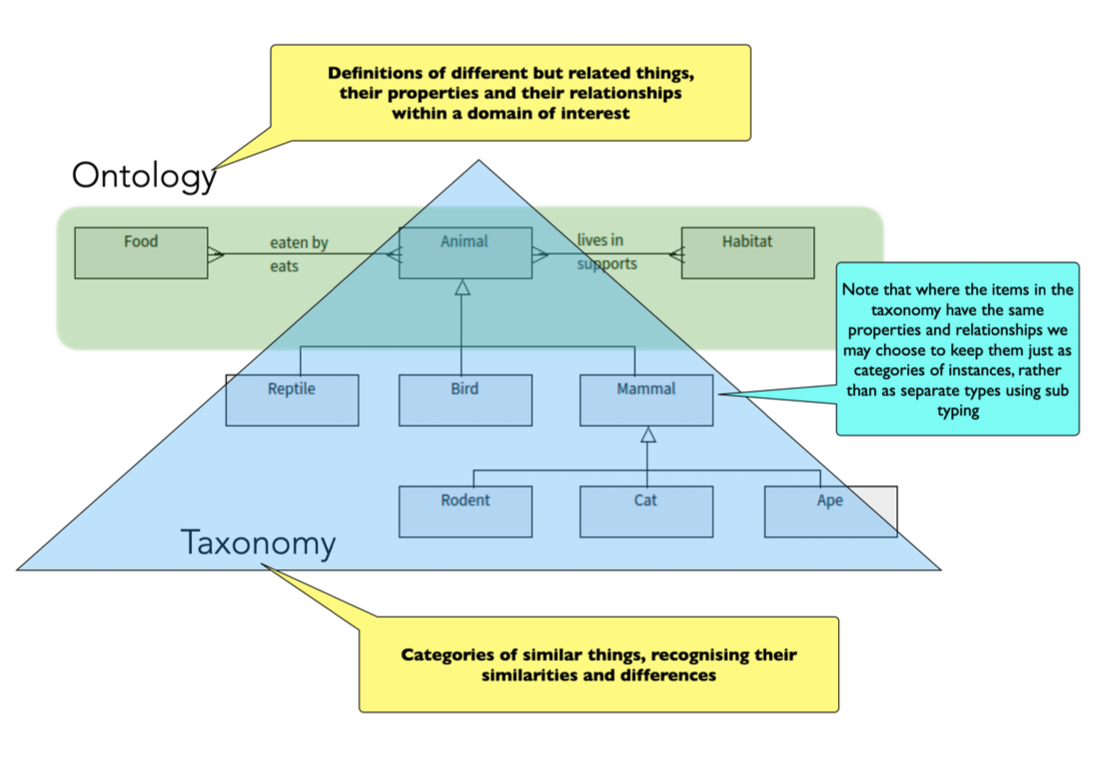
Use of ontologies (and confusion over their definition!) has increased substantially. Part of the confusion arises from the use of the term in philosophy (for centuries) where it is about the existence and nature of things versus its use in computer science where it is used to mean the concepts, properties describing them, and relationships between them (in other words a domain or meta model).

Good ontologies can underpin modelling languages and models, making them more consistent, meaningful, rigorous and effective in promoting interoperability. Taxonomies (expected categories of instances in the ontology) can also accelerate data gathering, help to find redundancies and gaps. Obviously, this can improve ROME.

#enterprise #modeling #ROME

Align Your Business and I.T. Strategies Before December

Take your organisation and your team to the next level. To achieve this you need an approach that takes into account all the various dimensions and stakeholders, external and internal. One that provides you with powerful techniques and generates persuasive, actionable deliverables. One that resonates with your executives and their lived experience/domain knowledge but that also leverages technology, digital and existing I.T.

You need to have the knowledge and awareness of key trends shaping the world and industry, build skills and capability and get your team and other strategic players on the same page. We developed our Holistic Architecture Language, Business Architecture Approach and Mastery Training Programme for exactly these needs. Built on over two decades of experience with scores of clients across many industries, our approach has proven effective and efficient. Feedback from the cohorts that have attended confirms this is the most comprehensive and effective business architecture programme available. You can read some testimonials here.

Our next programme kicks off in just two weeks.

We are offering special pricing for teams attending from the same company. Please contact us for details.

We have not forgotten high powered individual consultants and niche consultancies - please also contact us to hear special pricing for you.

Business Architecture Mastery Q1-2 Wrapped

We recently wrapped up the Business Architecture Mastery Programme for the 1st & 2nd Quarter with great feedback. We had 14 delegates with a variety of backgrounds from countries including UK, Cameroon, Jamaica, South Africa and Bulgaria.

The cohort worked brilliantly and everyone benefitted from the diverse experience in the group. The format of the programme is working well and the materials and supporting text have been refined. I really enjoyed having the mix of geographies and industries, ranging from Retail, Insurance and NGO’s to Government IT and Military!

Some comments from the delegates:

“Business Architecture is a lot more than just identifying capabilities and modelling. I really appreciated how it brought a wide breadth and depth of concepts together that illustrated what Business Architecture actually entails and what impact it has.”

“Very comprehensive set of techniques and best practices, one of the main benefits was drawing on [Graham’s] wealth of experience and wisdom and really learning from the examples presented.”

“[The programme] has given an overarching view of all of the different elements that need to be set up as the organisation is growing and expanding... what are these elements that we need to put in place and consider if we want to grow in a very healthy way.”

“I also think that your course is very well-structured and it leads you over different aspects of the business architecture work and it was a pleasure for me. And thank you and all of the others attending the course, thank you.”

“So as key takeouts I will take these tools that you’ve not only presented to us but managed to teach us how to use them because most of the courses only present the tools and don’t give the chance to implement these tools and find a way to use them in your daily work.”

We believe this programme is the most comprehensive yet practical available. This was borne out by very positive comments from some very seasoned attendees who still derived major value and gained new insights.

It runs over 16 weeks with a half day live session each week. See the course page for all the details.

The next programme begins on the 21st of July, and we’d love for you to join us. Those who do will receive a 400+ page e-book on Inspired’s holistic approach to business architecture for you to keep and use as a reference in your own work.

Early Bird Discount: Book and pay before 4 July to get 10% off the price.

Consult the course page for all the details
and to make a booking

If you are intrigued to know what set of skills and knowledge we think a fully competent business architect would have, please take our free online Business Architect Competency Survey.

Get Certified in TOGAF® (even if your employer isn't supportive!)

Are you battling to get a job or the position / promotion you want during these difficult times?

TOGAF® certification is proven to improve job prospects and remuneration received in enterprise architecture roles.

To assist you during the current challenges (COVID, unemployment, business uncertainty), we are offering a significant discount to individuals on our upcoming Practical TOGAF® courses, subject to the following conditions:

  • Individuals must be paying for their own tuition (i.e. not your current employer)

  • Course fees must be paid in full by Friday before course attendance

  • Places are still available (we limit numbers to ensure personalised attention)

Developing Economies Price (before local tax):
Normally ZAR 27000 / USD 1850
Offer Price ZAR 18 090 / USD 1240

Developed Economies Price (before local tax):
Normally USD 2500
Offer Price USD 1675

Our course is the best, most practical available and is fully accredited. You will receive full online live tuition (5 days), extensive supporting materials (including 400pp lecture notes, TOGAF® Reference, Study Guides, Examination Vouchers (Part 1 and 2, valid for a year) and other materials). Full details here.

To take advantage of this offer, book here and quote the offer, or you can contact angela@inspired.org

#enterprisearchitecture #togaf9 #certification #course #online

Want to become a Business Architect?


If you want a rapid but comprehensive course to transform you into a competent Business Architect, please read on.

Our Techniques and Deliverables of Business Architecture 5 day online live intensive course is coming up soon: 14 - 18th March 2022.

We introduced this course in 2011 and it has run to great acclaim since, training over 170 successful architects. It has been revised regularly and encapsulates leading practice. During the pandemic we have fully transformed it to run well in a remote interactive mode.

The course stresses the design of the future business enabled by technology and cognisant of all the forces shaping society, business, industry and enabled by data, digital and technology. It goes well beyond what is covered in other EA and Business Architecture methods, specifically in considering the context a business operates in and strategic factors as well as innovative product and and operating models exploiting digital opportunities.

If you are an Enterprise Architect wanting detailed techniques to meaningfully tackle business architecture, this course is ideal. It is also very suitable for senior Business Analysts transforming into an architect role. CIOs, Programme Managers and Business Strategists also benefit.

If you have previously certified in TOGAF or even the Business Architecture Guild offerings, this course still offers great value and new perspectives. The techniques have been honed by Inspired in over twenty years of consulting, training, methods development, modelling and tools implementation. A coherent and comprehensive meta model unifies techniques and integrates models, ensuring high integrity.
The course is highly interactive, hands on and leverages a challenging real world case study to reinforce learning.

The time slots are suitable for Europe, Africa and Middle East. If you fall outside these zones but are keen, please let us know. We plan to schedule a course for other time zones in the near future.

The best way to predict the future is to invent it.
— Alan Kay