

Master Information Architecture:
Design, Model & Deliver Enterprise-Ready Information Structures
Expert-led 4.5 day practical course including proven techniques, real-world deliverables and future-ready thinking
Techniques and Deliverables of Information Architecture
Who This Course Is For
This information architecture and data architecture course is designed for professionals who work with data and information at an enterprise level: shaping how it is structured, modelled, governed, and used across systems and business domains.
Data Architects
Information Architects
Enterprise Architects
Business Architects
Data Managers
Data Modellers
Business Intelligence Specialists
AI Engineers
Senior Business Analysts
Database Specialists
Integration Specialists
Governance & Compliance Professionals
If you work with how information is structured, connected, or used across systems and business domains, this course is for you.
What You’ll Gain from This Course
✔ Align business and IT
Create a shared understanding of data across technical and business teams.
✔ Stronger data foundations
Build robust structures for managing and exploiting enterprise data.
✔ Practical modelling skills
Apply proven techniques to real-world information challenges.
✔ Improved Data Integration and Quality
Integrate data across applications and environments. Enhance data quality and timeliness.
✔ Connect levels of design
Link conceptual, logical, and physical models into a coherent whole.
✔ Design for real-world systems
Support digital products, platforms, and data-driven services.
✔ Work with modern data technologies
Understand when to apply approaches like big data, NoSQL, and semantic models.
✔ Foundation for AI
Ensure a firm foundation for leveraging AI.
What Past Delegates Say
““I previously battled to feel competent as an information architect. This has really helped!””
““The training was an eye opener and encourages one to continue learning and do further research. Overall, I am inspired.””
““Content was really good and well presented. I will definitely recommend.””
““Joined with absolutely no knowledge and now have knowledge that I can use.””
““The presentation was very thorough and helped to understand the subject matter in depth.””
Content and Structure

This course equips you with practical techniques to understand and shape how data is used across the enterprise: from identifying challenges and risks to defining opportunities and strategic direction.
You’ll learn how to design a coherent information architecture and roadmap that aligns with your organisation’s vision for data, information, and knowledge.
Through a rich mix of techniques, examples and short videos, the course challenges conventional thinking and encourages you to explore new approaches. You’ll also be introduced to valuable sources and references to support your continued learning beyond the course.
A strong focus is placed on hands-on, team-based case study work. You’ll collaborate in small groups to analyse real-world scenarios, develop architectures and strategies, and learn through discussion, comparison, and iteration.
Throughout the course, emphasis is placed on holistic thinking: understanding how different factors interact and influence architecture decisions in complex, real-world environments.
Course content includes (subject to change):
1. Introduction
- Your Course Leader and Inspired
- Schedule, Logistics, Platform
- Cohort Introduction
- Course Structure
2. Basics
- Data, Information, Knowledge, Wisdom
- Data Types, Schema
- Meta Data
3. Change
- In Technology
- In Data
- In Business and Society
- In Applications
- In Expectations
4. Challenges
- Content, Structure, Technology
- Volume, Velocity
- Security, Privacy
- Quality
- Deriving Value
- Agility
5. Role, Function & Liaison
- Purpose and Benefits
- Organisation Structure
- Role of the Architect
- What an Architect Does
- What Constitutes a Data/Info Architecture
- Skills and Knowledge
6. Stakeholders & Requirements
- Stakeholders and Concerns
- Views and Viewpoints
- Functional Requirements
- Non-functional Requirements
7. Modelling
- Concepts and Levels
- Conceptual / Domain Modelling
- Ontology and Taxonomy
- Logical Modelling
- Physical Modelling
8. Conceptual / Domain Modelling
- Business Level
- Reasons and Benefits
- Sources of Information
- Business Glossary
- Modelling Techniques and Notations
9. Ontology and Taxonomy
- Definitions
- Techniques
- Usefulness
- Patterns
- Reference Models
10. Logical Data Modelling
- Generic Process
- Relational
- Object Oriented
- Document
- Graph
- Semantic
11. Relational Modelling
- Structure
- Modelling
- Normalisation
- Optimisation
12. Document Model
- Concept
- Modelling
- Advantages
- Disadvantages
13. Graph Model
- Concept
- Modelling
- Advantages
- Disadvantages
14. Semantic Modelling
- Concepts
- Standards
- Examples
- Advantages
15. Property Graphs
- Nodes
- Edges
- Properties
- Labelled Graphs vs RDF
16. Properties, Streams, Documents
- Language Data Types
- Code Sets
- Serialisation
- Common Formats
17. Working with Databases
- Data Definition
- Data Manipulation
- Query Languages
18. Physical Data Stores and DBMS
- Structuring Data
- Historic Options
- DBMS Models and Characteristics
19. Integration and Communication
- Exchanging Data
- Exchanging Information
- Communicating Successfully
- Invoking Services
20. Data Quality
- Why it is Imperative
- Understanding Quality
- Achieving Quality
21. Security and Privacy
- Why it is Imperative
- What Must be Managed?
- In the Lifecycle
- Privacy Laws and Principles
22. Stakeholders Content Representation
- Information Needs
- Communication
- Presentation
- User Interface
23. Business Intelligence
- Concept
- Data Warehouse
- Data Mart
- Data Fabric
- Analytics
24. Big Data, AI, ML
- Different Requirements
- Different Tools
- Artificial Intelligence
- Machine Learning
25. Content Architecture
- Everyone a Publisher
- Micro Formats
26. Data Management
- Planning
- Maturity
- Infrastructure Reference Models
27. Initiatives
- Baseline
- Target
- Analysis, Goals, Gaps
- Scoping
- Governance
28. References and Resources
- Books
- Papers
- Presentations
- Videos
- Web Resources
Enrolment and Pricing
Choose your country and booking type to see your price and available early-bird discounts.
We offer fair pricing for developed and developing economies. Discounts vary depending on how early you book and whether you are self-funded, company-funded, or part of a team.
This tool provides an estimate. Final amounts, including any applicable taxes, will be confirmed at enrolment.
The course fee includes:
✔ Course materials & templates
✔ Access to recordings
✔ Hands-on exercises and case study learning
✔ Access to extensive alumni materials for further learning.
Please contact us if you want to arrange an in-person or in-house course and we will review the request.
Why Inspired?
This course is built on over 40 years of industry experience and 25+ years of developing practical enterprise architecture techniques used in real-world organisations across multiple sectors, including banking, telecoms, healthcare, energy, retail, and government.
It is led by Graham McLeod, Chief Architect of Inspired, an experienced practitioner, educator, and speaker who works across both industry and academia. His focus is on making complex ideas practical, usable, and directly applicable under real-world constraints.
You may also benefit from contributions by selected guest experts, bringing additional specialist insight into key topic areas.
Unique content covered includes:
✔ Inspired Domain Modelling approach
A structured way of identifying subject areas and creating shared domain models that act as a “Rosetta Stone” between business and technical stakeholders.
✔ Advanced conceptual modelling techniques
Going beyond traditional ERD and UML to better reflect real-world complexity.
✔ Semantic technologies in practice
Understanding how they impact modern data-driven and commercial systems. Of particular relevance to knowledge systems and AI.
✔ Data and digital disruption
Exploring how data is reshaping industries and enterprise architecture decisions.
✔ Maturity and reference models
Assessing organisational capability and guiding structured improvement.
✔ Requirements and analysis techniques
Improving clarity, consistency, and completeness of architectural inputs.
✔ Patterns, integration, and interface design
Reusable approaches to solving common architectural challenges.
✔ Technology selection and evaluation criteria
Making informed decisions in a fast-changing technology landscape.
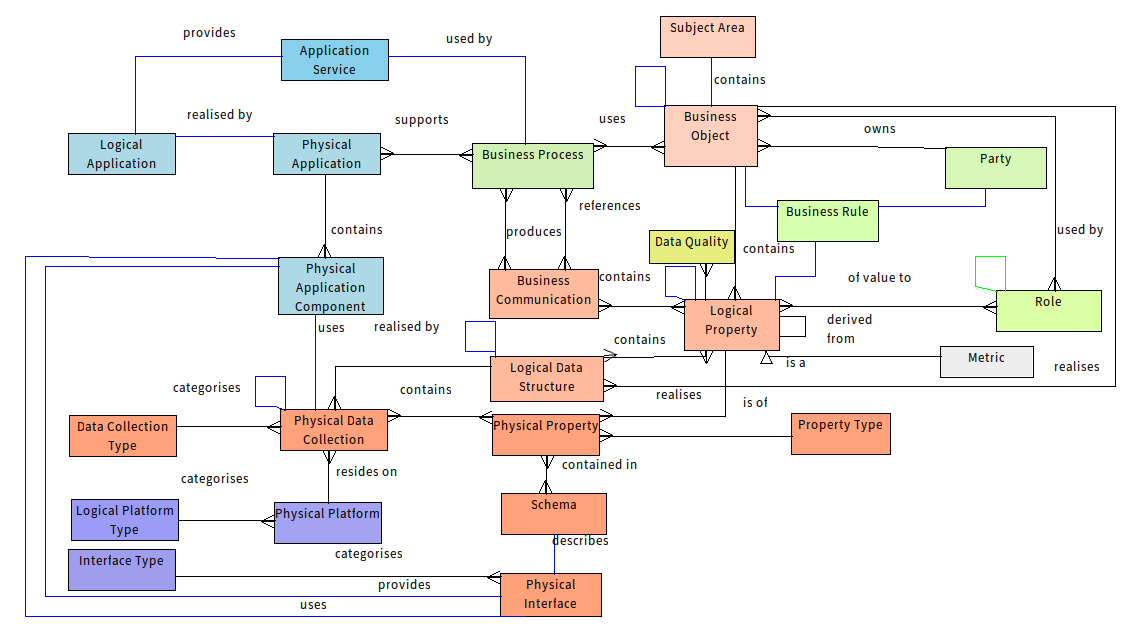
Information Architecture Meta Model - Excerpt from Inspired EA Frameworks Meta Model - © inspired.org
FAQs
-
Some familiarity with data or systems thinking is helpful, but you do not need to be an expert. The course is structured to support both experienced practitioners and those transitioning into information architecture roles.
-
It is strongly practical and skills-based, with a focus on real-world application. You will work through examples, modelling techniques, and case studies that reflect real enterprise challenges.
-
The course sits between business and technical domains. It is technical enough to be useful for architects and data professionals, but presented in a way that remains accessible to business-facing roles.
-
Yes. The techniques are designed to be directly applicable in enterprise environments, particularly in areas such as data modelling, architecture definition, and cross-team alignment.
-
This course focuses on enterprise-level information architecture, not just database implementation. It covers conceptual, logical, and strategic modelling rather than only physical database design or query languages.
-
Yes. The techniques are industry-agnostic and have been applied across sectors including finance, telecoms, healthcare, government, retail, and more.
-
We cover mainstream/traditional data modelling (Relational), more recent/specialised approaches (NoSQL, Document, Key-Value, Columnar, Graph), business intelligence (Star, Snowflake) and Semantic and AI (Vector, TripleStores).
-
The course is delivered via Zoom, which allows for interactive sessions, group exercises, and live Q&A. You can join via the Zoom app or directly in your browser; just make sure your device is compatible if you want to participate fully in the hands-on exercises.
-
All course materials, recordings, and resources are hosted on Ruzuku, an easy-to-use online learning platform. You can access content anytime, from any device with an internet connection, so you can review lessons at your own pace.
-
You will need a laptop, notebook or tablet with the appropriate software for participating in the Zoom sessions as well as team assignments. Useful software to have on the device includes:
A presentation program (Microsoft PowerPoint, Apple KeyNote, Open Office Impress)
A spreadsheet (Microsoft Excel, Apple Numbers, Open Office Calc)
A word processor (Microsoft Word, Apple Pages, Open Office Write)
Zoom conferencing software
Optional: A drawing / diagramming / modelling package of your choice
We understand this is not always easy, but ensuring you have good internet connectivity will greatly improve your experience in the live sessions.
Still Have Questions?
Not sure whether this training is suited to your role/organisation/experience?
Please use the form below to subscribe to updates, ask us anything or have us contact you for a discussion. Alternatively, book a call and we can discuss further, and find the right match for your needs.